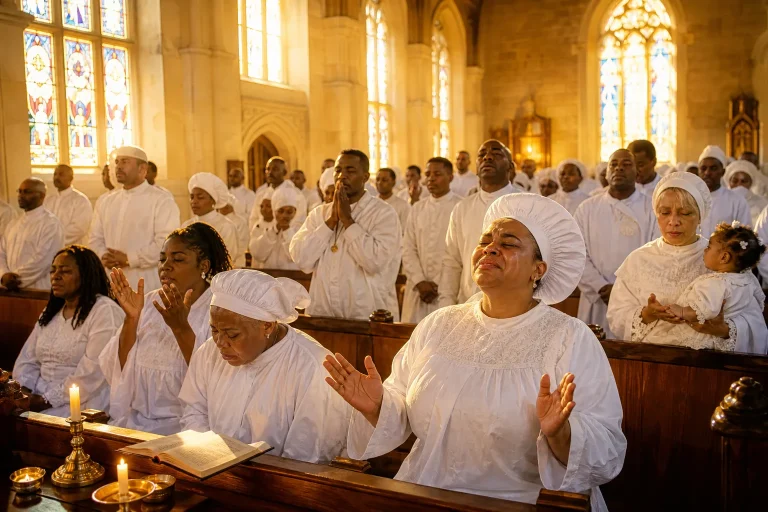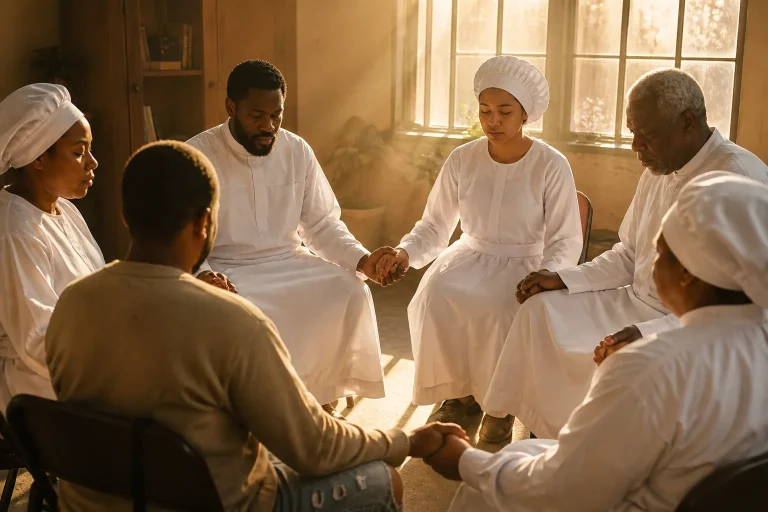








To our beloved members of the Celestial Church of Christ Worldwide, and especially to every family mourning the passing of a loved one, we extend our heartfelt sympathy, love and prayers.
Thank you for reading this post, don't forget to subscribe!The loss of a member touches more than one household. It reaches into the life of a parish, the friendships formed through worship and the wider fellowship of believers. A familiar voice is no longer heard beside us. A place once occupied now feels painfully empty. Ordinary moments remind us of someone whose presence we cherished.
At such a time, words can feel inadequate. We cannot explain every sorrow or remove the pain of separation with a message. Yet we can stand together, turn to the Scriptures and remind one another that God remains near.
Whether your loss is recent or you are carrying grief that others no longer notice, this message is for you. You are remembered. Your loved one’s life mattered. Your tears are not a failure of faith, and you do not have to walk through this season alone.
God Draws Near to the Brokenhearted
“The LORD is nigh unto them that are of a broken heart; and saveth such as be of a contrite spirit.”
Psalm 34:18, KJV
Grief can make the world feel unfamiliar. Activities that once seemed simple may require great effort. A song, a photograph or the sound of a familiar name can bring unexpected tears. Sometimes we may feel surrounded by people yet deeply alone.
The promise of Psalm 34:18 is not that believers will never experience heartbreak. It is that the Lord draws near to those whose hearts are broken. His presence is not reserved for moments when our prayers are confident and our emotions are settled. He is near when we struggle to speak, when we feel exhausted and when all we can say is, “Lord, help me.”
To every bereaved member, please remember that you do not need to hide your sorrow before God. You may come to Him honestly. He receives the prayer spoken through tears as surely as the prayer spoken with strength.
As a church family, we must reflect this tenderness. Our responsibility is to offer companionship, patient listening and compassionate care. A grieving person should never feel that they must recover quickly to make others comfortable.
Jesus Understands the Pain of Loss
“Jesus wept.”
John 11:35, KJV
These two short words offer profound consolation. At the tomb of Lazarus, Jesus entered the sorrow of those who were mourning. He saw their tears, heard their anguish and wept.
Although He knew what He was about to do, He did not dismiss the pain of Mary and Martha. His compassion reminds us that grief deserves tenderness. Tears are not proof that someone has forgotten God’s promises. They can be an expression of love and of the deep ache that comes with separation.
We should therefore be careful with the words we offer to bereaved families. Statements such as “You should be over this by now” or “A strong Christian would not cry” can deepen their hurt. The example of Jesus invites us to respond differently.
Sometimes the most faithful thing we can do is sit beside someone without trying to explain their loss. We can listen to the same memory more than once. We can allow silence. We can say, sincerely, “I am sorry. I am here with you.”
Our Saviour’s tears assure us that compassion and faith belong together. We can believe in the resurrection and still mourn deeply.
We Grieve, but We Hold to Hope
“But I would not have you to be ignorant, brethren, concerning them which are asleep, that ye sorrow not, even as others which have no hope.”
1 Thessalonians 4:13, KJV
The Apostle Paul did not tell the church that Christians must never sorrow. He addressed the character of their sorrow by reminding them of their hope in Jesus Christ.
Christian hope does not require us to pretend that death is easy. It does not make a funeral painless or remove the longing to hear a loved one’s voice again. Rather, it directs our hearts toward the risen Lord, whose victory over death is the foundation of our faith.
In 1 Thessalonians 4:13–18, Paul connects the believer’s hope with the death and resurrection of Jesus. He concludes by calling the church to comfort one another with these promises. This is a shared responsibility: hope is something we speak gently to one another when sorrow makes it difficult to remember.
For the grieving family, holding to hope may sometimes be as simple as attending worship, receiving a prayer or reading one verse before resting. There is no need to measure your faith by how much you can do while mourning.
When your strength feels small, allow the church to stand beside you. We are called to help one another remember that the Lord remains faithful.
Christ Is the Resurrection and the Life
“Jesus said unto her, I am the resurrection, and the life: he that believeth in me, though he were dead, yet shall he live.”
John 11:25, KJV
Jesus spoke these words to Martha in the midst of bereavement. His answer directed her toward Himself: the One in whom resurrection and life are found.
Our deepest consolation rests in who Jesus is. We do not place our hope merely in human endurance, the passing of time or our ability to understand what has happened. We place our hope in the crucified and risen Christ.
There will be questions for which we do not have immediate answers. Why did this happen now? How will the family manage? What will life look like without this person? We should not offer confident explanations where God has not given us one.
Instead, we may bring these questions to Him while holding to what He has revealed: His love, His faithfulness and the promise of life through His Son.
As we remember our departed members, we entrust them to God’s mercy and righteous care. We give thanks for the love shared with them, and we ask the Lord to sustain those who must continue through the pain of their absence.
Remembering Lives with Gratitude and Honesty
“I thank my God upon every remembrance of you.”
Philippians 1:3, KJV
Remembering a loved one can bring both tears and gratitude. We may recall a word of encouragement, an act of generosity, a familiar greeting or a quiet kindness that few others noticed.
Within our church communities, many people serve in ways that attract little public recognition. They welcome newcomers, visit those who are unwell, encourage younger members, help prepare for worship or offer practical support when a family is struggling. Such acts can leave lasting marks on the lives of others.
Where these memories reflect the person we have lost, let us share them with care. A thoughtful message to the family may help them understand how their loved one touched another life.
We can honour a person without pretending that any human life was without difficulty or imperfection. Love allows us to remember truthfully and gratefully.
Families may wish to preserve photographs, write down favourite memories or gather stories from friends. Others may not be ready for this immediately. We should respect their wishes and allow remembrance to take place at a pace they can bear.
No Family Should Carry Grief Alone
“Bear ye one another’s burdens, and so fulfil the law of Christ.”
Galatians 6:2, KJV
Consolation becomes meaningful when it takes practical form. A bereaved family may be facing responsibilities that feel overwhelming while their emotional strength is already stretched.
There may be meals to prepare, children to care for, visitors to receive and ordinary household tasks that still need attention. Some families may also face financial pressure or uncertainty about the days ahead.
Rather than offering only a general “Let me know if you need anything,” we can make a specific, considerate offer. We might ask whether a meal would be helpful, whether someone needs transport or whether there is an errand we can complete.
Always ask before making arrangements. Support should respect the family’s preferences, privacy and circumstances. What comforts one household may feel intrusive to another.
Those who live far away can still offer steady care through a telephone call, a personal message or appropriate assistance coordinated with the family.
The purpose is to make Christ’s love visible through faithful service. Even a small act, offered with humility and without seeking recognition, can ease a difficult day.
Continue Caring After the Funeral
“Rejoice with them that do rejoice, and weep with them that weep.”
Romans 12:15, KJV
The days surrounding a funeral often bring many visitors, messages and expressions of support. Afterwards, life becomes busy again for those outside the household. For the bereaved family, however, the absence remains.
This is why continued care matters. A person who seemed composed during the funeral may struggle when the house becomes quiet. The practical demands of the first days may have left little space to feel the full weight of the loss.
Let us remember to check in weeks and months later. A brief message saying, “You are in my thoughts today,” can be deeply reassuring. An invitation to share a meal or take a gentle walk may offer companionship without demanding conversation.
Birthdays, anniversaries, festive seasons and familiar church occasions can also bring renewed sorrow. Remembering these dates may help a grieving person feel less forgotten.
We should not assume that silence means someone no longer needs care. Nor should we insist that they speak when they are not ready. Faithful support offers both presence and freedom, allowing the person to receive companionship in the way they need.
Make Room for Different Expressions of Grief
“To every thing there is a season, and a time to every purpose under the heaven.”
Ecclesiastes 3:1, KJV
The same passage speaks of “a time to weep” and “a time to mourn” in Ecclesiastes 3:4. Scripture recognises sorrow as part of human life.
Within one family, people may express grief differently. One person may speak often about the deceased, while another may become quiet. One may find comfort in familiar activities, while another may need more time before returning to them.
We should avoid judging love by outward appearance. Someone who cries openly does not necessarily love more than someone who is reserved. A person who smiles at a cherished memory has not forgotten their loss.
Children and younger relatives also need patient attention. Their questions deserve kindness and honest, age-appropriate answers. They should know that they are loved and that trusted adults are available to listen.
For everyone, there should be room to seek support. Speaking with a trusted pastor, a counsellor or another qualified professional can be part of receiving care. Asking for help is not a spiritual failure.
Let our churches be places where grieving people are welcomed with patience rather than pressured to follow someone else’s timetable.
When Prayer Feels Difficult
“Likewise the Spirit also helpeth our infirmities: for we know not what we should pray for as we ought.”
Romans 8:26, KJV
There are times when grief leaves us unable to form a long prayer. We may sit with the Bible open and struggle to concentrate. Familiar hymns may bring comfort one day and tears the next.
Romans 8:26 reminds us that we are not left to depend entirely on our own ability to find words. The Holy Spirit helps us in our weakness.
A short prayer is still a prayer. “Father, carry me today.” “Lord, give our family peace.” “Jesus, help me through this evening.” These simple cries may express everything we have strength to say.
Others can pray with us and for us. A trusted church member may read a psalm aloud or sit quietly beside us. We can receive this support without feeling obliged to respond with a speech or explanation.
In seasons of mourning, let us approach God as we are. He does not require polished language before He will hear us. Our weakness does not place us beyond His care.
The Promise of God’s Lasting Comfort
“And God shall wipe away all tears from their eyes; and there shall be no more death, neither sorrow, nor crying, neither shall there be any more pain.”
Revelation 21:4, KJV
This promise gives the church a vision beyond the sorrow of the present. God’s final renewal is described as a life in which death, mourning and pain no longer hold their present place.
We should offer this passage gently. It is a promise to sustain the grieving, not a reason to hurry them past their tears. The same God who promises to wipe away tears does not despise those who shed them now.
For today, we may still feel the pain of an empty chair or an unanswered telephone call. We may still miss the familiar presence of someone we love. Yet Scripture invites us to trust that sorrow will not have the final word in God’s completed work.
Until that day, we continue in faith, receiving His care and extending it to one another. We remember, we pray and we hold to the hope given to us in Christ.
A Call to Our Worldwide Church Family
To every parish, ministry group and member of the Celestial Church of Christ Worldwide, let this be a time to renew our commitment to compassionate fellowship.
Where a family is mourning, let there be patient support. Where an elderly member is alone, let there be thoughtful companionship. Where a child has lost someone important, let there be trusted adults who offer stability and kindness.
Let us also be careful with information. Do not circulate unconfirmed accounts of a death, private family conversations or photographs without permission. Expressions of sympathy should honour the dignity of the departed and the wishes of those who mourn.
We need not wait for a public role before showing care. Every member can offer something: a prayer, a listening ear, a meal, a visit or a respectful message.
May our fellowship help every bereaved person know that they remain part of a loving church family.
A Celestial Hymn for Reflection and Comfort
CCC Hymn 647 — “We Come to the Market in the World”
As we remember our departed members, we can turn to the hymns of the Celestial Church of Christ for shared reflection. CCC Hymn 647, offers an image of our earthly journey as a visit to a marketplace.
We may reflect on this image as a reminder that our time here is temporary and precious. We meet one another, form relationships, carry responsibilities and have opportunities to serve. While we have life, let us use it to love sincerely, seek reconciliation and support those who need our care.
For a grieving family, this reflection should be offered tenderly. The temporary nature of life does not make a loved one’s absence less painful. Rather, it encourages us to treasure the love we shared and place our hope in God beyond what we can presently see.
“For here have we no continuing city, but we seek one to come.”
Hebrews 13:14, KJV
As we sing or reflect quietly, let us remember our bereaved families in prayer. May familiar worship bring companionship when words are difficult, and may the promises of Christ sustain us through the sorrow of separation.
Join the Community to Share Your Condolences
“Blessed are they that mourn: for they shall be comforted.”
Matthew 5:4, KJV
To every grieving member: you are not forgotten. May the Lord comfort your heart, uphold your family and surround you with people who will walk beside you patiently.
We invite members and friends to offer a message of consolation, a Bible passage, a cherished memory or a prayer for our bereaved families.
Already a member? Sign in and add your words of comfort in the comments.
Please share with kindness and respect. Mention names, circumstances or family details only when the family has made them public or given permission. A simple, sincere message of love can mean more than many words.
May the peace of our Lord Jesus Christ sustain all who mourn, and may our church family continue to bear one another’s burdens in love.
All Scripture quotations are from the King James Version.
💬 Questions or need prayer? We are here any time:
- ☎️ 1-844-7-CCC-HUB (844-722-2482) – Toll-free: call free - ask Grace (LULI) any question, or ask her for prayer and our Prayer Minister or Comfort will pray with you right on the call. Text JOIN for service and event updates (Call · Text JOIN)
- 📱 959-CCC-CHUB (959-222-2482) – Call - ask Grace (LULI) any question, or ask her for prayer and our Prayer Minister or Comfort will pray with you right on the call - or chat with Grace on WhatsApp (Call · WhatsApp)
- 💬 +1 771-233-5885 – Chat with Grace (LULI) on WhatsApp: questions, prayer requests and more (WhatsApp)